I. Why Screen Printing?
Think of it as stencil printing . A fine mesh screen is coated with photosensitive emulsion, then exposed to UV light through a film. The pattern areas remain open; the rest seal shut. Ink is pushed by a squeegee through the open mesh and transferred onto the glass.
The real challenge? Glass is smooth and low-energy. Ordinary ink won’t stick—it beads up like water on a lotus leaf. The key is achieving molecular-level adhesion : durable, sharp, permanent.
II. From Design to Finish: 7 Steps
1. Design & Film Output
Vector art ensures sharp edges. Output to high-resolution film—the first physical form of the pattern.
2. Mesh & Screen Prep
Mesh count (e.g., 400 mesh = 0.1mm line precision) determines detail. The screen must be stretched evenly under high tension to prevent distortion.
3. Coating & Exposure
Sensitized mesh is exposed with film on top. Washed out, the open mesh reveals the exact pattern.
4. Glass Pre-Treatment
The invisible hero. Glass is cleaned thoroughly. Advanced methods: plasma treatment or adhesion promoters—like a hidden Velcro layer for ink.
5. Ink Mixing
Ink isn’t ready-to-use. Base ink + hardener + thinner—precisely measured, mixed, and de-aired. Color matched in advance.
6. Printing
Glass positioned under the screen. Squeegee moves at a controlled angle (75–85°), pressure, and speed. Ink transfers through the mesh. Every variable affects thickness and uniformity.
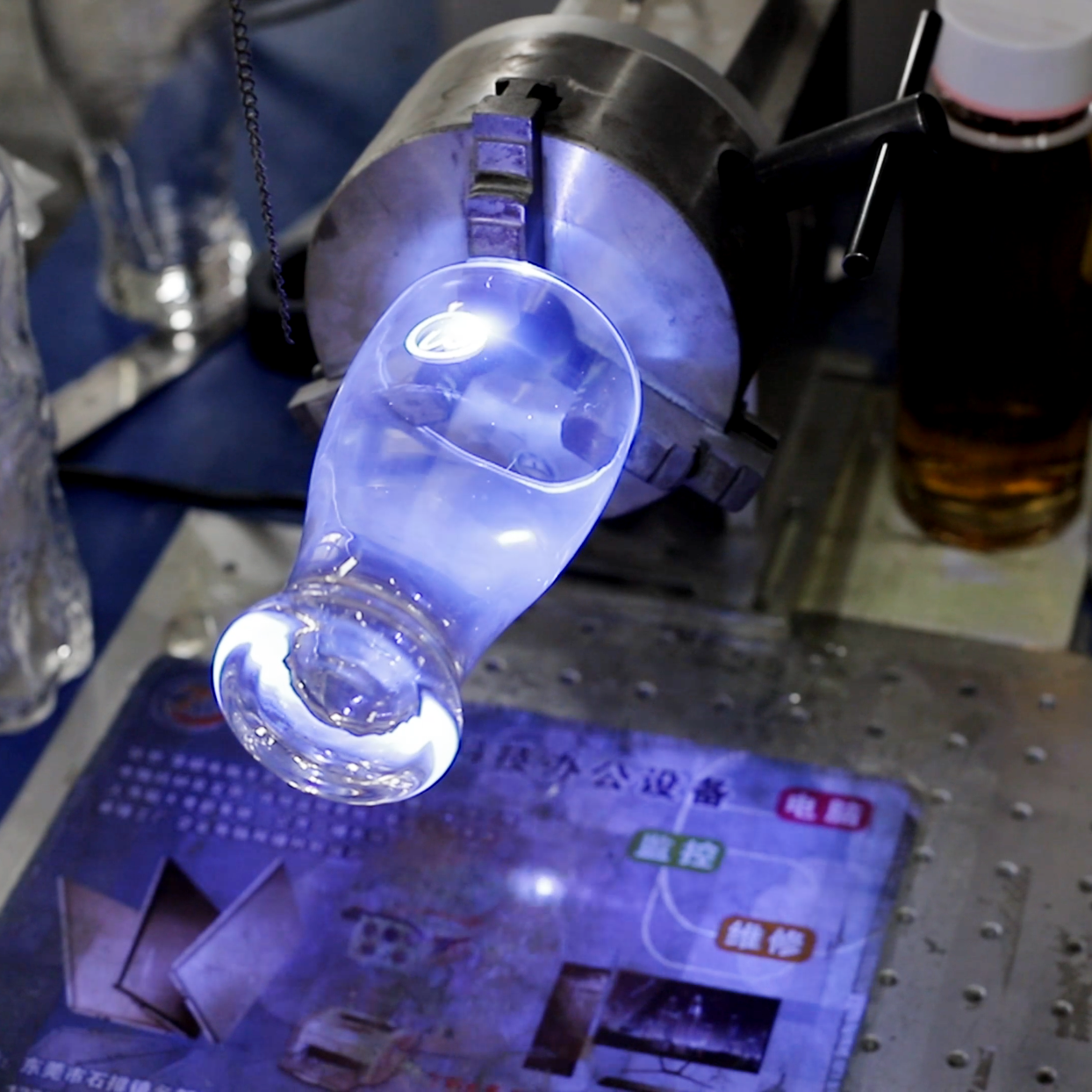
7. Curing
Where ink bonds for good.
- UV curing : Seconds under UV light, liquid to solid.
- Thermal curing : Baked to evaporate solvents or trigger cross-linking.
Under-curing = future peeling.
III. Ink: No One-Size-Fits-All
- Solvent-based – Strong adhesion, vivid color. Slower cure, VOCs. Ideal for durable home appliance panels.
- UV ink – Fast cure, eco-friendlier, excellent weather resistance. Suited for high-volume production, outdoor signage, electronics.
- Water-based – Lowest VOCs, eco-friendly. Weaker adhesion and chemical resistance. Used for indoor decor or food-contact items when required.
*Wrong ink choice = right process, wrong result.*
IV. Common Failures & Fixes
- Blurred or broken lines – Often low screen tension or faulty stencil.
- Pinholes, bubbles – Air trapped in ink, or dust/oil on glass.
- Poor adhesion, chips off easily – Inadequate pre-treatment, or under-curing.
Experienced printers test early: tape pull, fingernail scratch.
V. How to Judge Print Quality
1. Sharpness – Clean edges, no bleeding or jagged lines.
2. Adhesion – Try scratching (gently) with a fingernail.
3. Use context – Ask if the print resists cleaners and weather. Outdoor = far tougher requirements.
VI. Future: Smarter, Greener
- Auto-registration systems – Accuracy to 0.02mm.
- Digital screen printing – No stencil needed, ideal for customization.
- Eco UV/water-based hybrids – Performance + responsibility.
In Conclusion
That crisp icon on your appliance or faded dial in your car?
It’s not just color.
It’s a precise translation—from digital to physical.
A marriage of surface chemistry and mechanical force.
Cleaned, activated, transferred, cured.
Tested against heat, wipe-downs, sunlight, even chemicals.
Screen printing is how industry—patiently, rigorously—gives glass a lasting voice.
Behind every familiar mark is a quiet science built to last.
References / Chinese Standards (GB/JC/HG):
- GB/T 38597-2020 – VOC test methods for inks
- GB/T 9286-1998 – Cross-cut test for paint films
- JC/T 2170-2013 – Colored glazed glass for decoration
- HG/T 4850-2015 – UV-curable coatings